

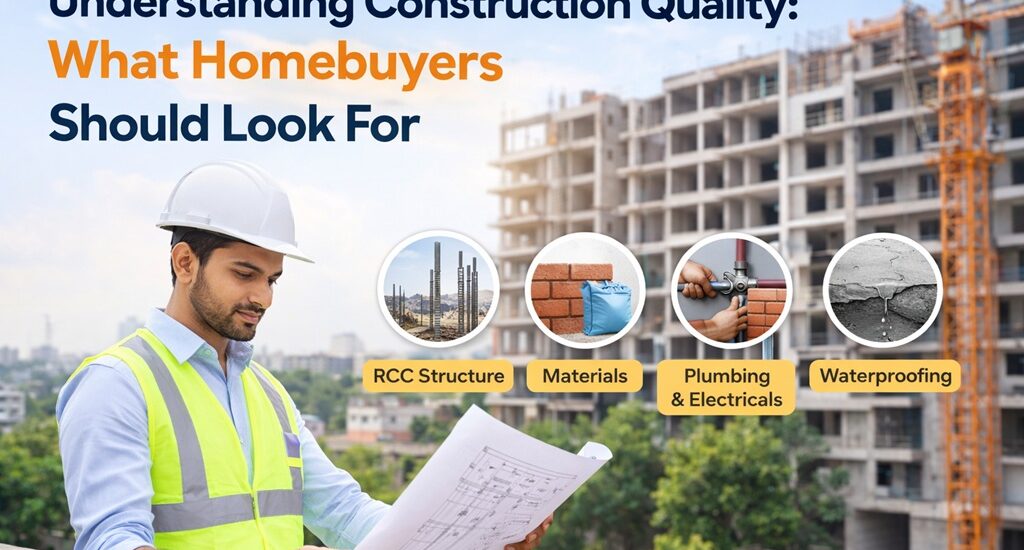
Construction quality is one of the most critical aspects of any residential or commercial property. While design and amenities attract buyers, it is the quality of construction that determines the building’s safety, durability, and long-term value.
1. Structural Strength
A strong RCC framed structure forms the backbone of a building. Proper reinforcement, quality cement, and adherence to engineering standards ensure resistance against environmental stress and long-term wear.
2. Materials Used
High-quality construction materials such as branded cement, steel, bricks, and finishing products play a major role in the longevity of a property. Poor-quality materials may reduce costs initially but lead to higher maintenance expenses later.
3. Flooring, Doors & Windows
Vitrified or anti-skid tiles, well-finished doors, UPVC or aluminum windows, and proper fittings reflect the overall construction standard. These elements also impact comfort and aesthetics.
4. Electrical & Plumbing Systems
Safe electrical wiring, adequate power points, proper earthing, and reliable plumbing systems are essential for daily living. Poor installations can lead to frequent repairs and safety hazards.
5. Waterproofing & Drainage
Effective waterproofing in bathrooms, balconies, and terraces prevents seepage and structural damage. A well-designed drainage system ensures hygiene and longevity of the building.
6. Workmanship & Supervision
Good workmanship under proper technical supervision ensures that construction follows approved plans and quality benchmarks.
Conclusion
Homebuyers should look beyond visual appeal and focus on construction fundamentals. A well-built home offers safety, comfort, and peace of mind for years to come, making construction quality a non-negotiable factor.